
History of Tattoos

The History of American Tattoos

American tattooing

Early American tattoos tended to be memorial tattoos. During the Civil War, tattoo artists often worked near battlefields, creating tattoos in memory of fallen soldiers and comrades, the military life, and American patriotism in general.

It wasn’t until 1891 when Samuel O’Reily patented his tattoo machine in New York that tattoos truly grew in popularity among the general public in America, however. Using Edison’s ‘electric pen’ design, O’Reily’s creation allowed everyone to get a tattoo. This was both good and bad; the average man was more likely to get tattoos, but tattooing in the upper class began to become less popular since it was no longer a status symbol.

via History of Tattoos.
 

Tattoos | History & Archaeology

Humans have marked their bodies with tattoos for thousands of years. These permanent designs—sometimes plain, sometimes elaborate, always personal—have served as amulets, status symbols, declarations of love, signs of religious beliefs, adornments and even forms of punishment. Joann Fletcher, research fellow in the department of archaeology at the University of York in Britain, describes the history of tattoos and their cultural significance to people around the world, from the famous ” Iceman,” a 5,200-year-old frozen mummy, to today’s Maori.

What is the earliest evidence of tattoos?

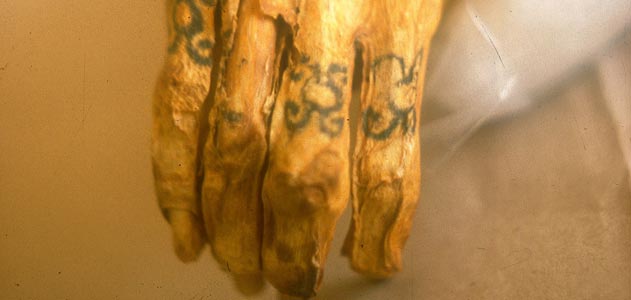
In terms of tattoos on actual bodies, the earliest known examples were for a long time Egyptian and were present on several female mummies dated to c. 2000 B.C. But following the more recent discovery of the Iceman from the area of the Italian-Austrian border in 1991 and his tattoo patterns, this date has been pushed back a further thousand years when he was carbon-dated at around 5,200 years old.

Can you describe the tattoos on the Iceman and their significance?

Following discussions with my colleague Professor Don Brothwell of the University of York, one of the specialists who examined him, the distribution of the tattooed dots and small crosses on his lower spine and right knee and ankle joints correspond to areas of strain-induced degeneration, with the suggestion that they m

via Tattoos | History & Archaeology | Smithsonian Magazine.

Tattoos – News


It’s hard to look authentically rebellious or menacing these days, when even well-behaved businessmen wear earrings and ponytails and college students destined for quiet suburban lives have body piercings and tattoos.

Tattoos, in particular, are not the radical brandings, the bold violations of flesh and propriety, they once were. Available in New York from almost 1,400 licensed tattoo artists, tattoos are probably better and safer now than they’ve ever been — more creative and varied, applied in many cases by serious, highly skilled body artists. Then again, there are tattoos, and there are tattoos. It is unlikely that the ambitious professional with a single, understated, discreetly placed and wittily conceived tat, or for that matter the teenager with her boyfriend’s name and two lovebirds emblazoned in the small of her back, will ever have tattoos on the face and scalp, or a full chest or back “panel” or a tattooed arm or leg.

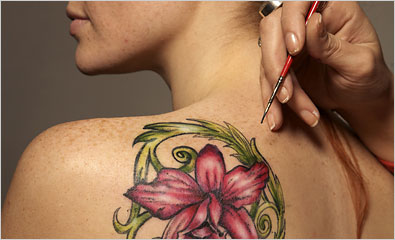
Some tattoo aficionados, though, have transformed large portions of their bodies into multicolored canvases for all manner of skulls, serpents, raptors, flame-breathing dragons, flowers, vines, angels, demons, daggers, buxom bombshells and portraits of heroes and loved ones.

Read More…

Tattoos have been used for centuries to reflect changes in life status, whether passage in

via Tattoos – News – Times Topics – The New York Times.

Finding the Right Tattoo Artist

I find it quite fascinating how many different styles of tattoos there are from bio-mechanical to traditional.  With many artist specializing in a specific style it’s important to find the artist that most closely matches the style of tattoo you want. Many artist are not comfortable doing portraits, others may just concentrate on traditional and then they’re artist that can do it all.

Take the time to talk with many artist and ask what styles they like doing the most. If you know the style of tattoo you want, look through the artist portfolio and look at similar styles to make sure the quality is what you want. Spending the extra time before hand can make all the difference; as I see too many individuals that wished they had gone elsewhere. Don’t let that be you!

With the number of shops that have opened and will continue to open I can only imagine that a large percentage of the artist have very limited experience, some should not even be called artist.  That’s why they coined the phrase “scratcher” and you can go on-line and see numerous examples on Craigslist or other websites.  I’ve been amazed at some of the atrocious work that some are wearing. Again, don’t let that be you!


Getting a Great Tattoo

One of the most important aspects of getting a great tattoo is the cleanliness of the procedure area and all the associated instruments being used. Making a call to your local health department will take only a few minutes and they can usually provide recommendations to the cleanest shops nearest you. Another good idea is to take a look at the shops restroom and if it’s not clean, good chance other areas are not either.

A good tattoo artist will show you during setup the equipment being used, which can include instruments that have been sterilized in an autoclave. Monthly testing of the autoclave should also be performed to insure proper sterilization. Most shops are required by law to do this. Single use needles are another means of making sure you are getting the cleanest tattoo possible.

Covering your new tattoo for the first hour with plastic wrap will also reduce the chances of infection.  After care of your new body art is extremely important in making it look great for years to come. Tattoo artist will generally provide an after-care packet that explains this process.  I highly recommend making the extra effort in the care of your new body art in the few days after receiving.